
- 0
- 1,859 word
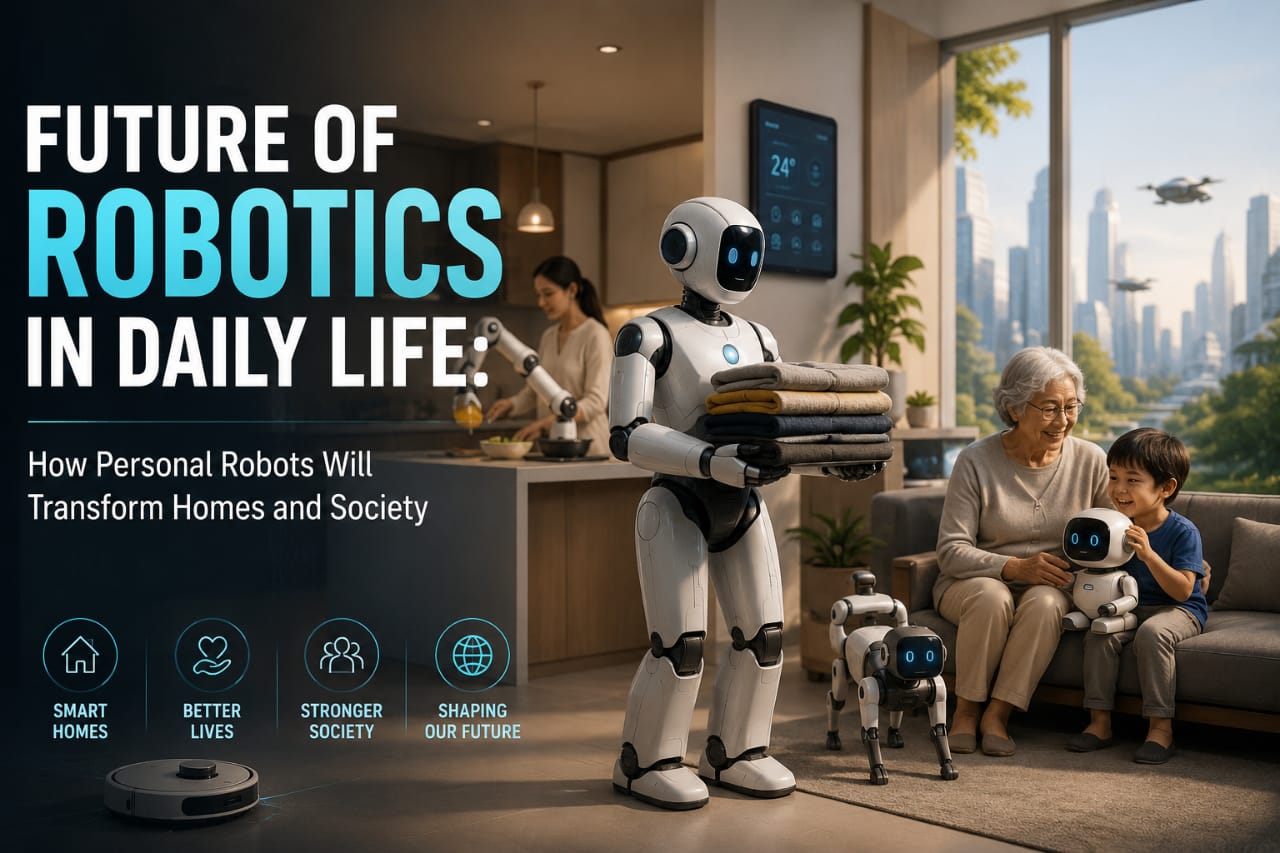
The future of robotics is no longer a distant concept discussed only in research laboratories or science fiction movies. It is becoming part of our daily reality. Over the last 15 years, I have watched robotics evolve from highly specialized industrial machines into intelligent systems capable of assisting families, supporting healthcare professionals, improving security, and transforming how we live.
When I first began following robotics technology trends, most robots were confined to manufacturing facilities. They performed repetitive tasks behind safety barriers and required significant programming expertise. Today, robotics in everyday life is visible in homes, hospitals, warehouses, airports, hotels, and even classrooms.
What fascinates me most is the speed of change. Technologies that once seemed impossible robots recognizing faces, understanding speech, navigating homes, and learning from experience have become practical solutions. Artificial intelligence has accelerated this transformation, making robots smarter, more adaptable, and increasingly useful.
The future of robotics matters because it will impact virtually every household. Just as smartphones became essential within a decade, home robotics technology is positioned to become a fundamental part of modern living.
Understanding the Future of Robotics
What Is Modern Robotics?
Modern robotics combines mechanical engineering, artificial intelligence, machine learning, sensors, and software to create machines capable of performing tasks with varying degrees of autonomy.
Unlike traditional automation systems that follow fixed instructions, modern robots can perceive their environment, process information, and make intelligent decisions.
Today’s robots can:
- Recognize objects
- Navigate complex environments
- Communicate with humans
- Learn from data
- Adapt to changing situations
These capabilities form the foundation of the future of robotics.
How AI Is Transforming Robotics
Artificial intelligence has become the driving force behind robotics innovation.
In my experience, AI has done for robotics what the internet did for communication—it fundamentally changed the possibilities.
Machine learning enables robots to improve performance over time. Computer vision allows robots to understand surroundings through cameras and sensors. Natural language processing helps robots communicate naturally with people.
For example:
- Home robots can recognize family members.
- Healthcare robots can monitor patient behavior.
- Security robots can identify unusual activities.
- Service robots can understand voice commands.
Why Robotics Adoption Is Accelerating
Several factors are driving robotics technology trends:
- Falling hardware costs
- Better sensors
- Faster processors
- Cloud computing
- Advanced AI models
- Growing labor shortages
As these technologies mature, robotics in everyday life becomes increasingly practical and affordable.
Robotics in Everyday Life Is Already Here
Smart Home Assistants
Many people don’t realize they already interact with robotic systems daily.
Voice assistants connected to smart home ecosystems can control lighting, security systems, entertainment devices, and appliances through simple commands.
I’ve observed that smart assistants often serve as the gateway technology that introduces families to broader automation.
Robotic Vacuum Cleaners
One of the most successful examples of home robotics technology is the robotic vacuum cleaner.
Early versions struggled with navigation and obstacle detection. Modern models use AI-powered mapping systems, advanced sensors, and intelligent route planning.
Many households now view robotic cleaning as essential rather than optional.
Home Security Robots
Security robots are becoming increasingly sophisticated.
Modern systems can:
- Patrol properties
- Detect intrusions
- Identify unusual movements
- Send alerts instantly
- Monitor multiple locations
The future of robotics in home security is particularly promising as AI improves threat detection capabilities.
Elderly Care Robots
Perhaps the most impactful development is elderly care robotics.
With aging populations worldwide, robots can assist with:
- Medication reminders
- Mobility support
- Emergency monitoring
- Social interaction
- Health tracking
In my conversations with healthcare professionals, many see care robots as a necessary solution for future caregiving challenges.
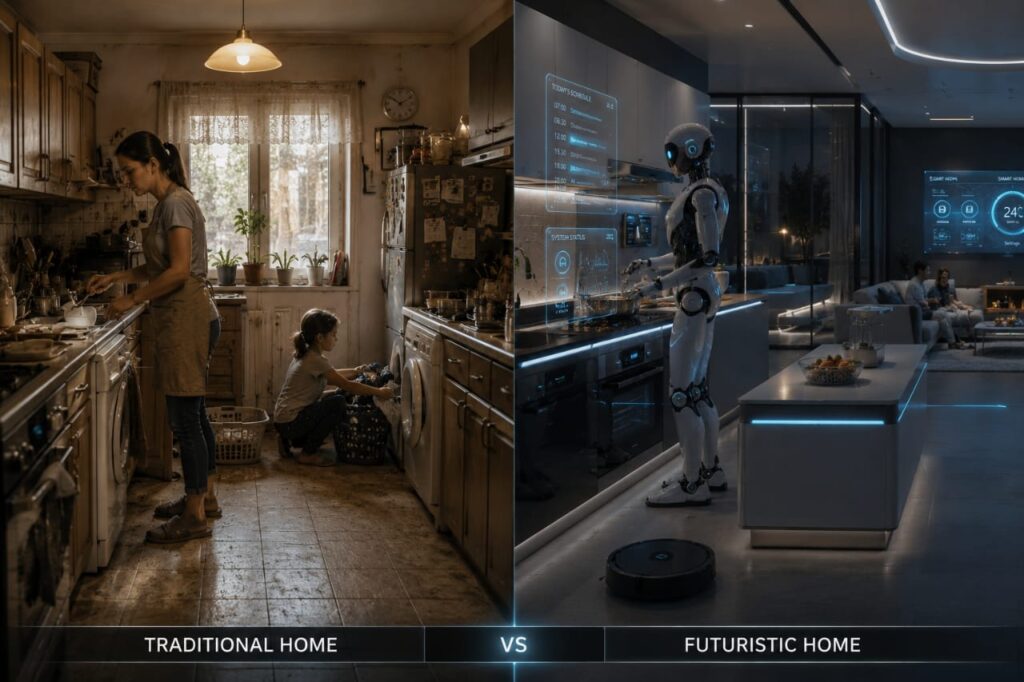
Home Robotics Technology Will Transform Households
Automated Cleaning
Cleaning robots will evolve far beyond vacuuming.
Future systems may:
- Wash windows
- Clean bathrooms
- Organize rooms
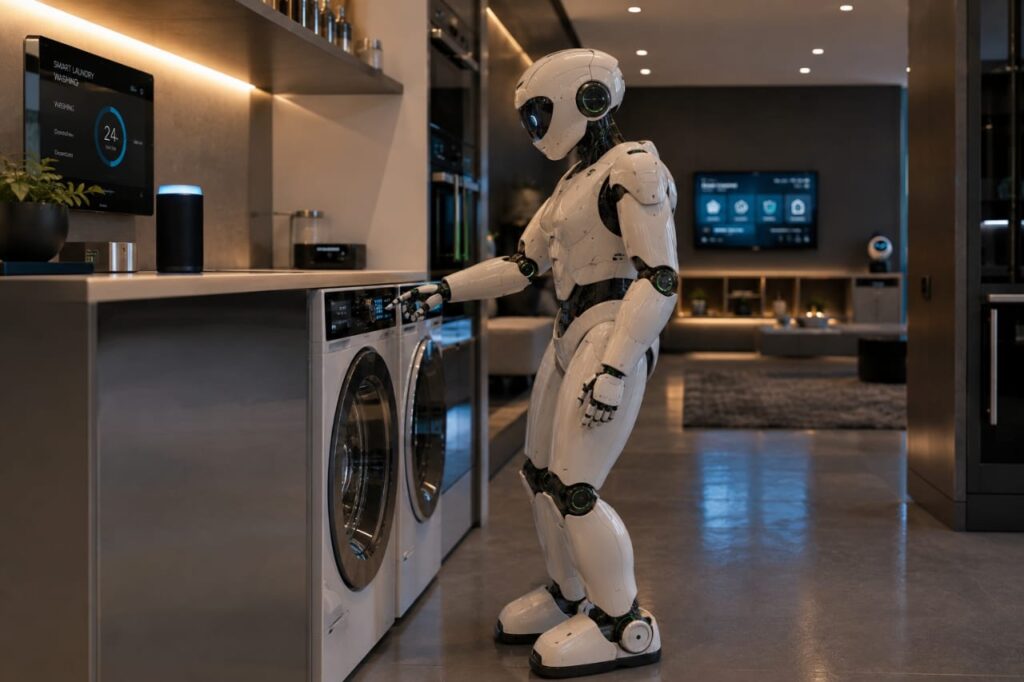
- Handle laundry
- Dispose of waste
These capabilities will save significant time for busy families.
Smart Cooking Assistants
Kitchen robotics is advancing rapidly.
Future robots may:
- Prepare ingredients
- Follow recipes
- Monitor nutrition
- Cook meals automatically
- Manage grocery inventories
As AI becomes more sophisticated, robotic chefs may become common in homes.
Household Maintenance Robots
Maintenance robots could inspect homes for:
- Water leaks
- Electrical issues
- Structural damage
- Air quality concerns
Preventive maintenance could become largely automated.
Childcare and Family Assistance
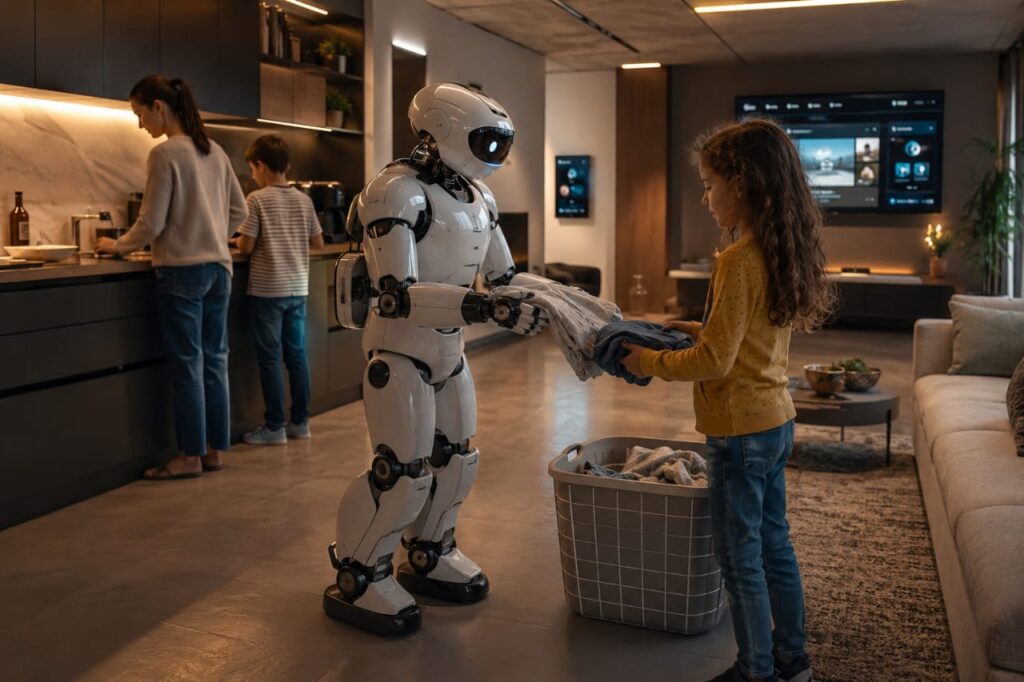
While robots will never replace parents, they can provide valuable support.
Potential applications include:
- Educational tutoring
- Activity monitoring
- Homework assistance
- Language learning
- Safety supervision
The personal robots future will focus on assisting families rather than replacing human relationships.
Personal Robots Future and Human Companionship
AI-Powered Personal Assistants
Personal robots future developments will create assistants capable of understanding preferences, routines, and goals.
Imagine a robot that:
- Manages schedules
- Coordinates travel
- Tracks health
- Provides reminders
- Anticipates needs
This level of personalized assistance is becoming increasingly realistic.
Companion Robots
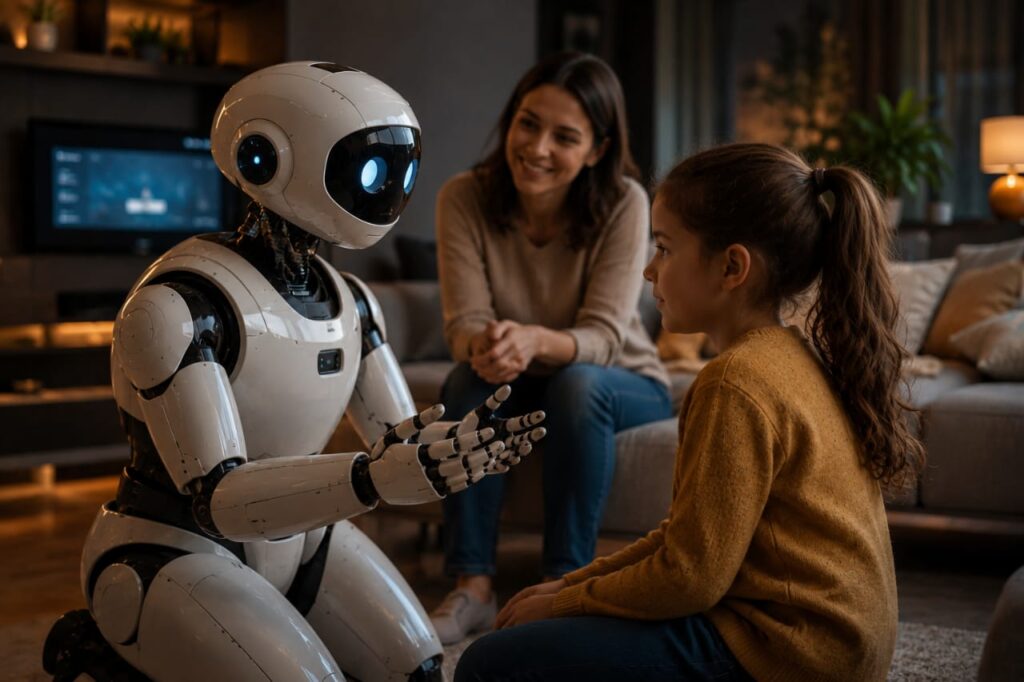
One surprising trend I have observed is growing acceptance of companion robots.
These systems provide:
- Social interaction
- Emotional support
- Entertainment
- Conversation
- Cognitive stimulation
Particularly among seniors, companion robots can reduce feelings of loneliness.
Educational Robots
Educational robots will revolutionize learning.
Students may interact with AI-powered tutors that adapt teaching styles to individual learning needs.
Personalized education could significantly improve learning outcomes.
Healthcare Support Robots
Healthcare support represents one of the most valuable applications of robotics in everyday life.
Future robots may:
- Monitor vital signs
- Assist rehabilitation
- Support medication management
- Provide remote healthcare access
Emotional Intelligence and Ethical Considerations
As robots become more socially aware, ethical questions emerge.
Key considerations include:
- Privacy protection
- Data security
- Human dependency
- Transparency
- Emotional manipulation risks
Responsible development will determine how successfully society embraces the future of robotics.
Robotics Technology Trends Shaping the Next Decade
Humanoid Robots
Humanoid robots are advancing rapidly.
Their human-like form enables interaction with environments designed for people, making them ideal for service applications.
Autonomous Service Robots
Service robots will increasingly operate independently in:
- Hotels
- Airports
- Restaurants
- Retail stores
- Healthcare facilities
AI-Driven Robotics
AI will continue driving robotics innovation through:
- Predictive decision-making
- Adaptive learning
- Real-time optimization
- Natural communication
Collaborative Robots (Cobots)
Cobots work alongside humans rather than replacing them.
Their flexibility makes them ideal for both industrial and household environments.
Edge AI Robotics
Edge AI allows robots to process information locally rather than relying entirely on cloud systems.
Benefits include:
- Faster responses
- Better privacy
- Improved reliability
- Reduced latency
These robotics technology trends will define the next decade.
Benefits of Robotics in Everyday Life
Increased Convenience
Robots simplify daily routines and reduce repetitive tasks.
Better Productivity
Automation allows people to focus on higher-value activities.
Improved Healthcare
Robotic assistance enhances patient care and monitoring.
Enhanced Safety
Security robots help identify threats and improve emergency response.
Accessibility for Seniors
Robots enable greater independence for aging populations.
Time Savings
One of the most significant benefits is reclaimed time.
Many tasks that currently consume hours each week may become fully automated.
Comparison Table – Traditional Living vs Robotics-Enhanced Living
| Feature | Traditional Living | Robotics-Enhanced Living |
|---|---|---|
| Household Tasks | Manual and time-consuming | Automated and optimized |
| Healthcare Support | Reactive care | Continuous monitoring and assistance |
| Security Monitoring | Human observation | 24/7 AI-powered surveillance |
| Personal Assistance | Self-managed schedules | Intelligent robotic support |
| Productivity | Limited by manual effort | Enhanced through automation |
| Convenience | Dependent on human availability | Always-on robotic assistance |
| Elderly Care | Family or caregiver dependent | Continuous support and monitoring |
| Future Scalability | Limited efficiency gains | Constant improvement through AI updates |
Challenges Facing the Future of Robotics
Privacy Concerns
Robots collect significant amounts of personal data.
Security Risks
Connected devices remain vulnerable to cyber threats.
Cost Barriers
Advanced robotics solutions can still be expensive.
Ethical Issues
Society must establish clear guidelines regarding robot behavior and decision-making.
Workforce Displacement
Automation may replace certain job categories while creating new opportunities.
Public Trust
Building trust will remain critical for widespread adoption.
Balancing innovation with responsibility will determine long-term success.
Industries That Will Benefit Most From Robotics
Healthcare
Robotic surgery, rehabilitation, diagnostics, and patient care.
Education
Personalized learning and intelligent tutoring systems.
Manufacturing
Increased efficiency and safer workplaces.
Retail
Inventory management and customer assistance.
Hospitality
Automated service delivery and guest support.
Logistics
Warehouse automation and autonomous delivery systems.
Smart Homes
Integrated home robotics technology improving comfort, safety, and convenience.
My Perspective After 15 Years Following Robotics
Looking back over the last 15 years, what surprised me most was not how powerful robots became, but how quickly they entered ordinary life.
Many experts predicted robotics growth, but few anticipated the speed of AI integration.
Technologies that exceeded expectations include:
- Computer vision
- Speech recognition
- Autonomous navigation
- Machine learning
- Human-robot interaction
One breakthrough that changed everything was the convergence of AI and robotics. Before AI maturity, robots followed instructions. Today, they understand context, learn patterns, and adapt behavior.
For businesses, preparation means embracing automation strategically rather than resisting it.
For families, preparation means understanding how robots can enhance quality of life while maintaining human-centered values.
The biggest lesson I’ve learned is simple: successful robotics adoption is not about replacing humans. It is about empowering people.
Final Thoughts
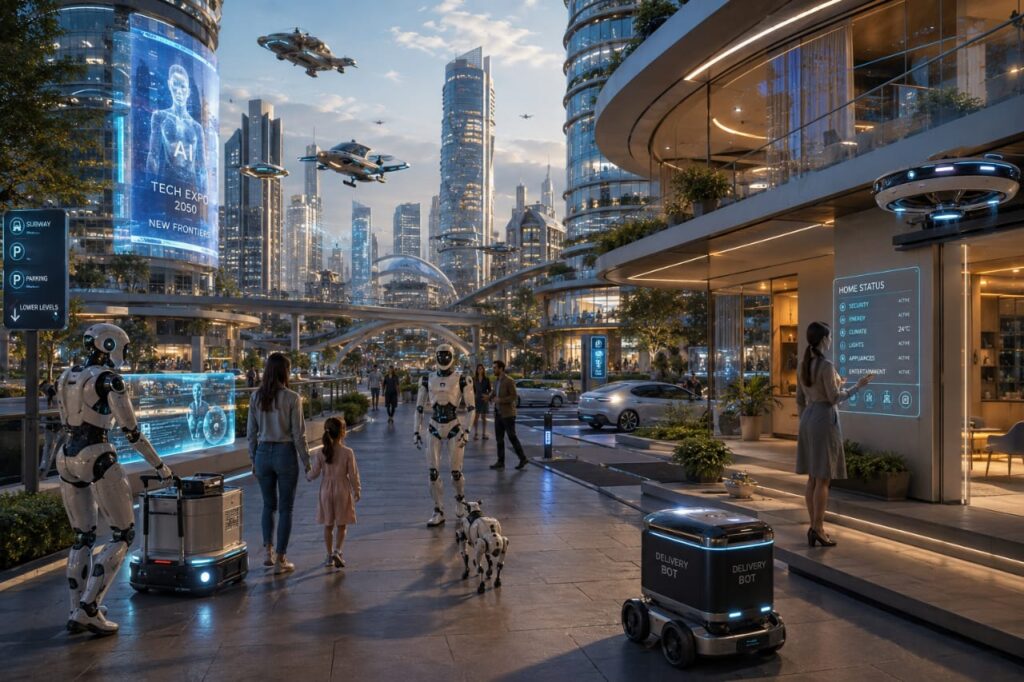
The future of robotics will reshape society in ways comparable to the internet revolution and smartphone era. Robotics in everyday life will become increasingly common as AI capabilities improve and costs decline.
Home robotics technology will transform how households operate, while the personal robots future promises greater convenience, accessibility, and productivity. At the same time, challenges involving privacy, ethics, security, and workforce transitions must be addressed responsibly.
The most exciting aspect of robotics technology trends is not the machines themselves it is the opportunities they create for people. Robots will help families save time, support healthcare systems, enhance safety, and improve quality of life.
The future belongs to a world where humans and intelligent machines work together. Those who understand and embrace this transformation today will be best positioned to benefit from the remarkable opportunities ahead.
FAQ Section
What is the future of robotics?
The future of robotics involves intelligent machines capable of assisting people in homes, workplaces, healthcare facilities, and public spaces through advanced AI, automation, and machine learning.
How will robotics affect everyday life?
Robotics in everyday life will automate routine tasks, improve healthcare, enhance home security, support education, and provide personalized assistance.
What are the latest robotics technology trends?
Major robotics technology trends include humanoid robots, AI-driven robotics, collaborative robots, autonomous service robots, and edge AI systems.
Will personal robots become common in homes?
Yes. As costs decrease and capabilities improve, personal robots future adoption is expected to mirror the widespread growth of smartphones and smart home devices.
How will home robotics technology change daily routines?
Home robotics technology will automate cleaning, cooking assistance, maintenance monitoring, healthcare support, and household management, saving time and improving convenience.
Author

razamohd1203@gmail.com
Related Posts
Space Technology in 2026: How Future Space Technology is Transforming Exploration and Innovation
- 0
- 1,598 word
Fifteen years ago, when I first began closely following the aerospace sector, space missions were largely dominated by government agencies, long development...
Future Internet Trends You Should Know: Next Generation Internet Technologies Shaping 2026 and Beyond
- 0
- 1,779 word
Over the last 15 years, I have witnessed some of the most remarkable transformations in digital history. When I first started analyzing...
AR vs VR: What’s the Difference Between Augmented Reality and Virtual Reality in 2026?
- 1
- 1,733 word
Imagine trying on a new pair of sunglasses without visiting a store or stepping inside a virtual classroom where you can walk...