
- 2
- 1,412 word
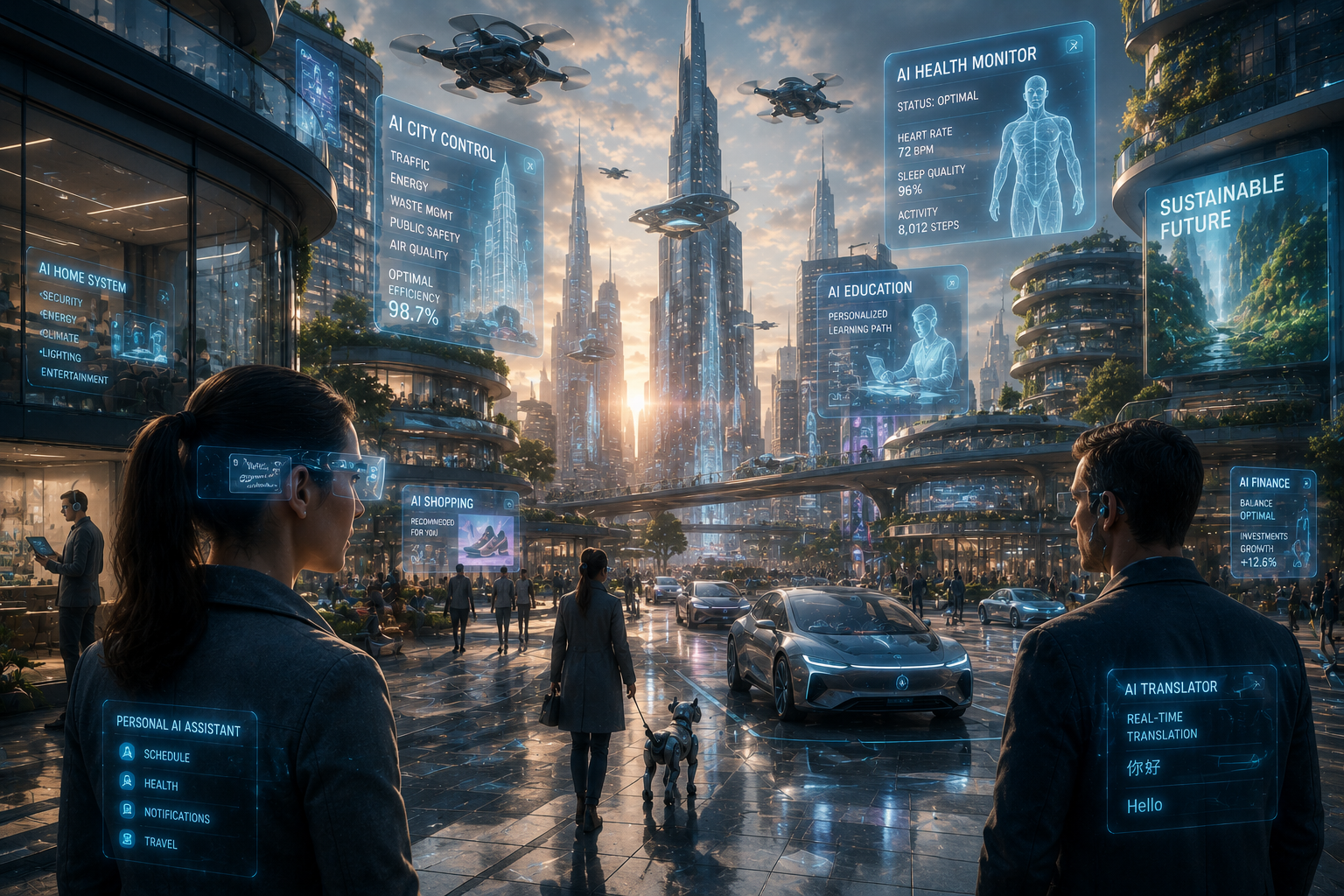
The future of artificial intelligence is no longer a distant concept I used to write about a decade ago as “coming soon.” It is already unfolding in front of us quietly embedded into our phones, homes, workplaces, and even our decision-making habits.
In my experience following AI development over the past decade, the biggest misconception people still have is that AI is something futuristic and separate from daily life. The reality is different. From recommendation systems on Netflix to real-time translation in smartphones, we are already living inside the early phase of ai in daily life future evolution.
What excites me most is not just what AI can do today, but how rapidly it is evolving into something far more autonomous, predictive, and emotionally aware. After analyzing multiple AI adoption trends across industries, I can confidently say we are entering a phase where future ai technology trends will redefine how humans interact with machines entirely.
This article explores how how ai will change everyday life, what artificial intelligence future applications will dominate the next decade, and what real-world transformations we should expect.
How AI is Already Entering Daily Life Today
Before understanding the future of artificial intelligence, it’s important to recognize how deeply it is already integrated into our routines.
Smart Assistants and Voice AI
Voice assistants like Siri, Alexa, and Google Assistant are early examples of conversational AI. They have moved beyond simple commands into contextual understanding, shaping early ai in daily life future behavior patterns.
AI in Smartphones and Apps
Modern smartphones use AI for camera enhancements, predictive text, face recognition, and app personalization. These are foundational artificial intelligence future applications already running silently in the background.
AI in Healthcare and Fitness
Wearables like smartwatches now track heart rate, sleep, and stress levels using machine learning models. This is an early indicator of how ai will change everyday life in preventive healthcare.
AI in Transportation
Navigation systems, ride-hailing apps, and traffic prediction tools already rely heavily on AI algorithms. This is just the beginning of deeper autonomous transport systems.
Future of Artificial Intelligence: Major Trends You Must Know
Hyper-Personalized AI Systems
One of the strongest future ai technology trends is hyper-personalization. AI will not just recommend content it will predict your needs before you express them.
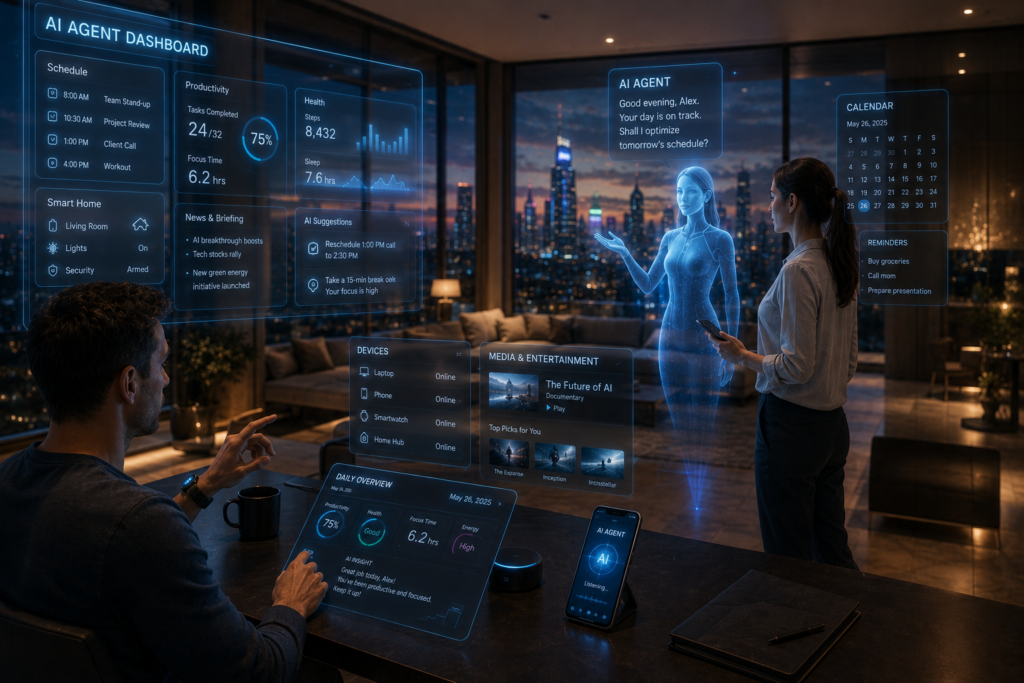
AI Agents Managing Daily Tasks
We are moving toward autonomous AI agents capable of scheduling meetings, managing emails, and even handling financial decisions. This is a major leap in ai in daily life future automation.
Emotional AI and Human Interaction
Emotion-detecting AI will interpret tone, facial expressions, and behavior to respond more naturally. This will redefine how ai will change everyday life communication patterns.
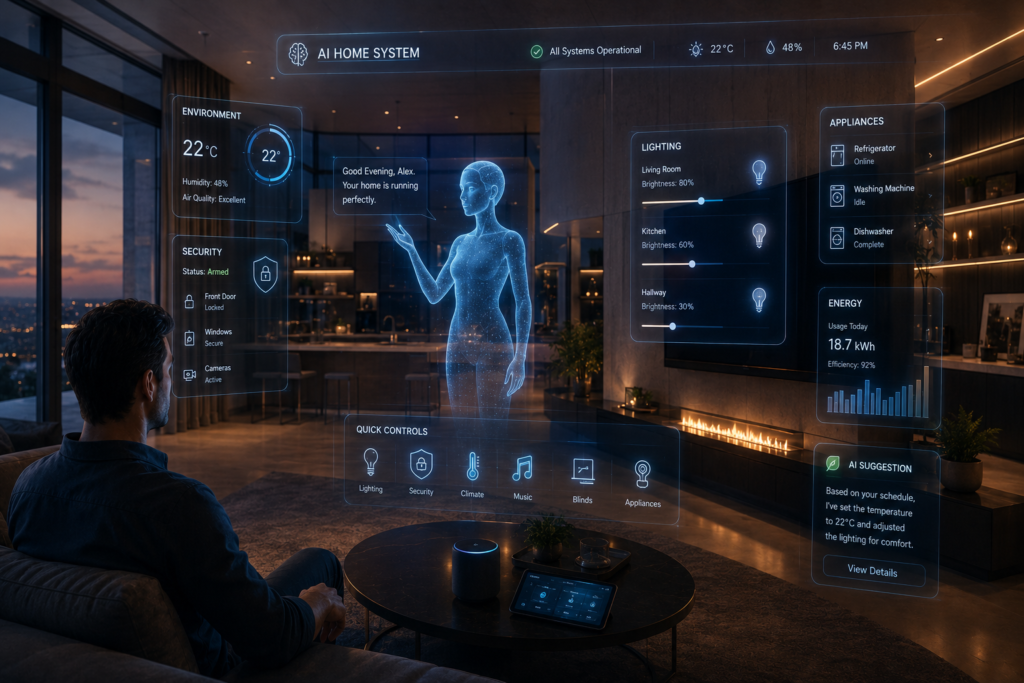
AI-Powered Smart Homes
Homes will evolve into intelligent ecosystems that adjust lighting, temperature, and security based on user behavior and environmental data.
How AI Will Change Everyday Life in the Next Decade
Work and Productivity Changes
The workplace will become AI-augmented. Routine tasks like reporting, data entry, and scheduling will be fully automated. Humans will focus more on strategy and creativity.
Education and Learning Revolution
AI tutors will personalize learning for each student. This is one of the most impactful artificial intelligence future applications in developing countries where education access is uneven.
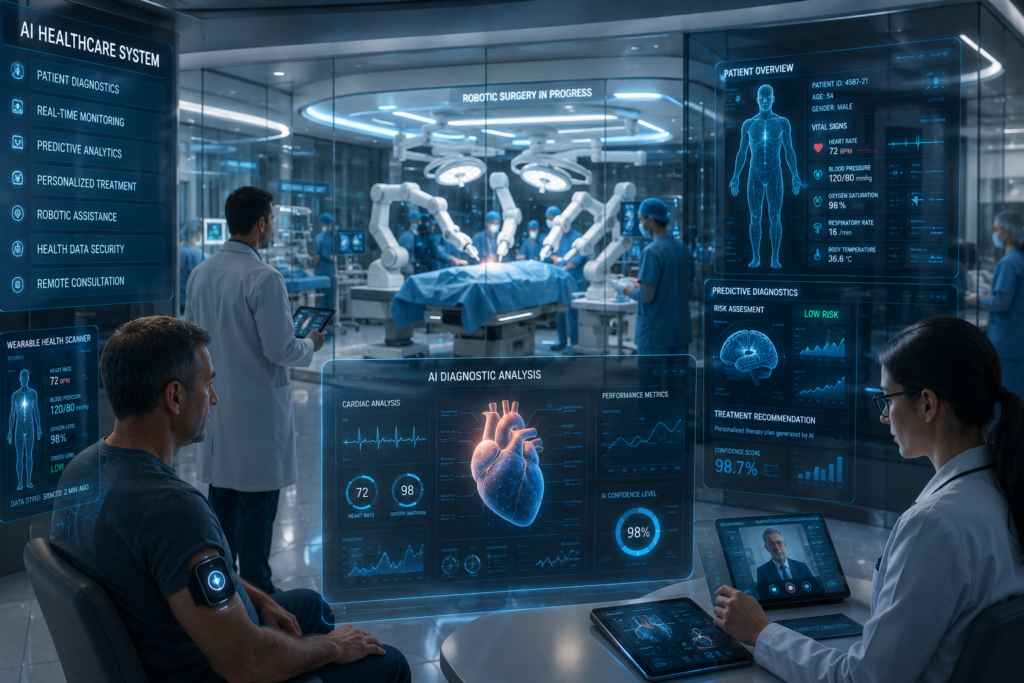
Healthcare Transformation
Predictive diagnostics will detect diseases before symptoms appear. AI-assisted surgery will improve precision and reduce risk.
Communication and Social Life
Real-time translation and AI-generated content will break language barriers. Social media itself will evolve into AI-curated experiences.
Artificial Intelligence Future Applications in Real Life
AI in Finance and Banking
Fraud detection, algorithmic trading, and personalized financial planning will be fully AI-driven. Banking will become more predictive than reactive.
AI in Entertainment and Media
Content creation is already shifting. AI-generated films, music, and video editing tools are reshaping the creative industry.
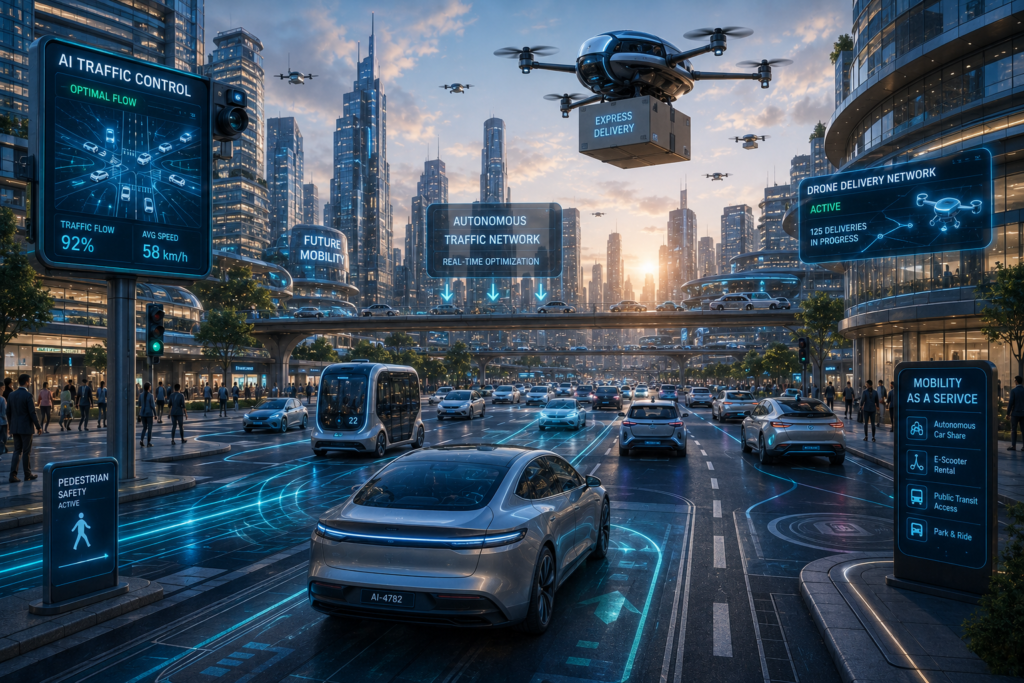
AI in Transportation & Autonomous Vehicles
Self-driving cars, smart traffic systems, and drone deliveries will redefine urban mobility.
AI in Security & Cyber Protection
Cybersecurity systems will rely on AI to detect threats in real time, adapting faster than human attackers.
Future AI Technology Trends Most People Ignore
AI Ethics and Regulation
Governments are increasingly focusing on responsible AI use. Ethical frameworks will become mandatory.
AI Privacy Challenges
With deeper data integration, privacy concerns will rise significantly in the future of artificial intelligence ecosystem.
Human-AI Collaboration Models
Instead of replacement, the dominant model will be collaboration humans guiding AI systems.
AI Dependency Risks
Over-reliance on AI could reduce critical thinking skills if not managed properly.
Edge AI Computing
Processing data directly on devices instead of cloud systems will improve speed and privacy.
Multimodal AI Systems
Future systems will combine text, image, audio, and video understanding into a single intelligent model.
Comparison Table: AI in Present vs Future
| Area | Today’s AI | Future AI Impact | Real-World Change |
|---|---|---|---|
| Healthcare | Diagnostic support tools | Predictive disease prevention | Longer life expectancy |
| Education | Online learning platforms | Personalized AI tutors | Equal learning opportunities |
| Work | Automation of tasks | Fully AI-assisted workflows | Higher productivity |
| Transportation | GPS and ride apps | Autonomous mobility systems | Zero human driving need |
| Communication | Translation tools | Real-time universal communication | Language barriers removed |
| Entertainment | Recommendation systems | Fully AI-generated content | Personalized media worlds |
Challenges of AI in Daily Life Future
Privacy Risks
As ai in daily life future expands, data collection will increase significantly, raising privacy concerns.
Job Market Changes
Automation may replace repetitive roles, requiring workforce reskilling.
Over-Reliance on AI
Excessive dependence could weaken human decision-making abilities.
Ethical Concerns
Bias in AI systems remains one of the most critical issues in future ai technology trends.
The Role of Humans in an AI-Driven Future
Even in a highly automated world, humans remain central.
- Human-AI collaboration will dominate industries
- Creativity will become more valuable than repetition
- Decision-making will be shared between humans and machines
- Emotional intelligence will remain uniquely human
What most people misunderstand about how ai will change everyday life is that AI is not replacing humanity it is reshaping human capability.
Future of Artificial Intelligence: Expert Predictions
Based on current industry trajectories, here are realistic expectations:
- AI will become an invisible infrastructure layer like electricity
- Every digital product will include AI by default
- Personal AI assistants will evolve into digital life managers
- Governments will regulate AI like financial systems
- Fully autonomous enterprises will emerge
These predictions align strongly with artificial intelligence future applications already being tested in advanced tech ecosystems.
Conclusion
The future of artificial intelligence is not just about smarter machines it is about a redesigned human experience. From healthcare to education, transportation to communication, AI is gradually becoming the backbone of modern life.
The evolution of ai in daily life future will bring both opportunities and challenges. While automation increases efficiency, it also demands responsibility, ethical governance, and continuous learning.
As future ai technology trends continue to evolve, one thing is clear: the real winners will be those who learn to collaborate with AI rather than compete against it.
The question is no longer how ai will change everyday life the question is how prepared we are to evolve with it.
FAQs
1. What is the future of artificial intelligence in daily life?
The future of artificial intelligence involves deeper integration into homes, workplaces, healthcare, and communication systems.
2. How will AI affect daily routines?
ai in daily life future will automate tasks like scheduling, shopping, learning, and even decision-making.
3. What are key future AI technology trends?
Key future ai technology trends include emotional AI, autonomous agents, and multimodal systems.
4. Will AI replace human jobs?
AI will automate repetitive tasks, but new roles will emerge requiring creativity and problem-solving.
5. What are artificial intelligence future applications?
Key artificial intelligence future applications include healthcare diagnostics, autonomous transport, AI education systems, and smart cities.
2 comments
Leave a Reply
Author

razamohd1203@gmail.com
Related Posts
Best AI Apps for iPhone in 2026: Top AI Assistants, Productivity & Automation Apps
- 0
- 1,701 word
Artificial intelligence has completely transformed the way we use our iPhones. What started with simple voice commands has evolved into powerful AI...
AI Tools for Teachers: 10 Smart Platforms Transforming Education in 2026
- 0
- 1,785 word
Artificial intelligence has moved far beyond being a futuristic concept in education. Over the past decade and a half, I have worked...
AI Voice Cloning Software 2026: My Real-World Tests Revealed the Most Human-Sounding AI Voices
- 0
- 1,458 word
Twenty-five years ago, creating a professional voice-over required a recording studio, expensive microphones, skilled voice actors, and hours of editing. Today, a...

Free AI Video Generator for YouTube Creators: Best Tools 2026
- 0
- 1,395 word
The way YouTube content is created has completely changed in the last few years. What used to take hours of scripting, filming,...
Best AI Productivity Apps for Remote Work in 2026 – Tools That Actually Save Time
- 3
- 1,903 word
Remote work has evolved from a temporary trend into a permanent business model. Over the last decade, I’ve worked with distributed teams...
AI Automation for Businesses: How AI is Changing Operations in 2026
- 3
- 1,809 word
In 2026, businesses are no longer asking whether they should adopt AI. The real question is how fast they can implement it...
Hello gamers!
I recently found https://995bdt1.com/
It’s a new gaming platform called 995BDT.
Free games available and get daily bonuses.
Takes 2 minutes to start.
Go check it and see for yourself.
Enjoy!
Hi everyone! Play at qq777bdt.net – new casino with BDT bonus. No deposit needed. Open the site and play slots. Good luck!